
10 August 2026
A groundbreaking new research study is taking cognitive behavioural therapy (CBT) beyond the consulting room and 'onto the streets' to help people living with psychosis rebuild their lives.
Researchers at Sussex Partnership NHS Foundation Trust are leading a national trial, funded by the National Institute for Health and Care Research (NIHR), involving several NHS trusts to test an innovative approach called Social Recovery Therapy (SRT). This is a form of cognitive behavioural therapy that helps people overcome the real-life barriers preventing them from working, studying, volunteering and reconnecting with their communities.
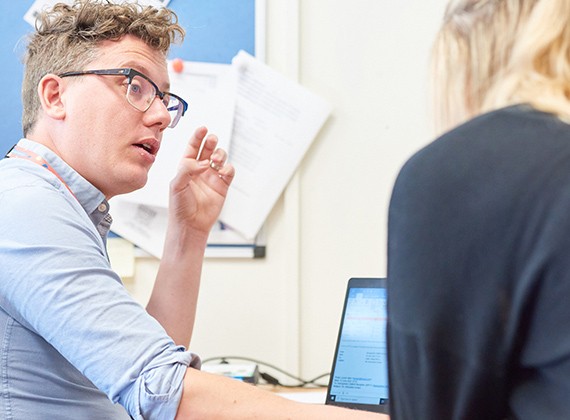
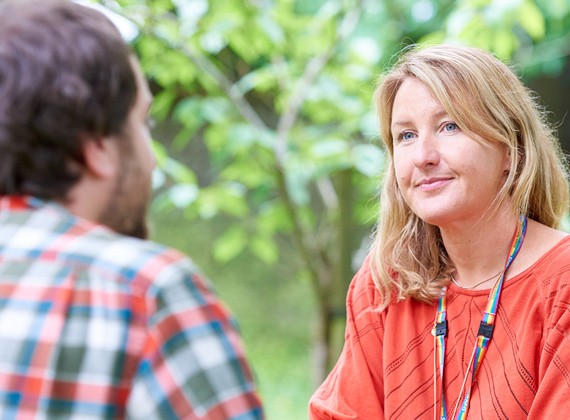
Unlike traditional therapy delivered in clinics, therapists work alongside participants in everyday settings, supporting them to build confidence and practice skills in real-world situations, such as catching a bus, going for a coffee, volunteering or returning to work.
Professor Mark Hayward, Director of Research for Sussex Partnership NHS Foundation Trust, said: "Traditionally, therapy has been provided within NHS consulting rooms and has focused on reducing symptoms. This study has the potential to be a game changer because it focuses on the recovery goals that matter most to people and takes therapy out onto the streets, where learning can feel more immediate and meaningful.
"Rather than simply talking about challenges, therapists help people build confidence and independence in real-life situations. I'm excited to see what we learn from offering therapy in this much more personalised way."
The national study, Improving Social Recovery in Psychosis (ISRiP), is co-led by Professor David Fowler from Sussex Partnership NHS Foundation Trust and Professor Joanne Hodgekins from the University of East Anglia. It is funded by a £2.8 million grant from the National Institute for Health and Care Research (NIHR).
Approximately 350 adults aged 18 and over, who are living with psychosis will take part across NHS Trusts in Sussex, Norwich, Cambridgeshire, and Greater Manchester.
Dr Sam Robertson, Lead for Public Involvement in Research at SPFT said: "A key benefit of this study is that the relationship between the participant and therapist is driven by the participant, and the therapy will take place where the participant wants it to take place. It is a different and equal working relationship between therapist and participant.
"From my experience, a huge problem with psychosis is that it often begins just as a young person is starting their adult life, whether that is higher education, employment or relationships. Psychosis can disrupt that journey before it begins and may leave someone reliant on services and benefits.
"Social Recovery Therapy acknowledges individual needs and by providing intensive therapy over a period of nine months, it helps people identify what is meaningful and productive to them."
Psychosis, including conditions such as schizophrenia, can leave people socially isolated and unable to take part in everyday activities that many people take for granted. These challenges can be even greater for people from minoritised communities, where additional barriers to recovery often exist.
Social Recovery Therapy focuses on helping people identify meaningful goals and gradually increase structured activities such as employment, education, volunteering, sport, leisure, childcare or household responsibilities. Early research has shown promising results, with participants spending significantly more time engaged in purposeful activities. Participants will be offered up to 16 sessions over a nine-month period and the key measure of success will be a change in behaviour and the ability to engage in chosen purposeful activities.
Professor Joanne Hodgekins said: "We're moving therapy beyond the clinic room and into everyday community settings, where people can work alongside a trained therapist to explore new activities and build confidence in real-life situations."
A key feature of the study is that the therapy will be delivered by trained psychological practitioners already working within community mental health teams, making it a potentially scalable and cost-effective model for wider NHS adoption if the trial proves successful.
The research team will also examine how the therapy can be adapted for people from different cultural backgrounds and how it could be integrated into routine NHS mental health services. If successful, a free treatment manual and training package will be produced to support rollout across the NHS.
Lucy Walsh, Research Involvement Co-ordinator at Sussex Partnership NHS Foundation Trust, worked with people with experience of psychosis throughout study setup and welcomed the study's commitment to involving people with lived experience throughout the research.
She said, "The ISRiP study has involved people at every stage of the research design. It has taken patient and public involvement seriously, with a genuine commitment to including the people the research is designed to support. It's particularly encouraging that the study offers different ways for people to get involved, recognising that flexibility helps make participation accessible to everyone."
Researchers hope the trial will provide the first definitive evidence on whether Social Recovery Therapy improves quality of life, increases participation in work and education, improves wellbeing and offers good value for money for the NHS.
The study opened to participants in Sussex in July 2026 and will be open for four years until 2030.